
Tuesday, June 30, 2015

Friday, June 19, 2015
Drop Everything and Read
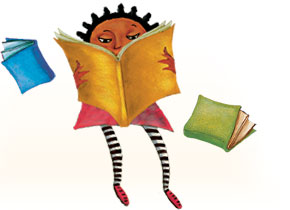
Reading is important. Today’s society
is based on effective reading skills. The ability to be a good citizen, to
acquire knowledge and make sound decisions are all predicated on one’s ability
to read, and read well. Even amidst the social media craze, the key to being
effective, being liked, and being followed is the readability of the posts.
Words emit a response, rather good or bad, positive or negative. We connect
with family and friends, our past and our futures with words. They are
everywhere we are and even in places devoid of sound or light, words exist.


Knowledge = Power
Ensuring that your
children can read may be the difference between life and death, success and
despair – yes, it’s that urgent. Thus,
incorporating reading strategies and activities into your daily routine of
playing, writing, listening, making, and grooving to music, and talking are
integral to your child’s success and survival.
|
Activity
Shop till You Drop
Shopping for groceries is just one of many daily routines that you
can use to help your child learn. Shopping is especially good for teaching your
child new words and for introducing him to new people and places.
What You Need
Grocery shopping list
What to Do
1. Pick a
time when neither you nor your child is hungry or tired.
2. At the
grocery store, put your child in the grocery cart so that he faces you. Take
your time as you walk up and down the aisles.
3. Let
your child feel the items that you buy — a cold carton of milk, for example or
the skin of an orange. Talk to your child about the items: "The skin of
the orange is rough and bumpy. Here, you feel it."
4. Be
sure to name the objects that you see on shelves and talk about what you are
seeing and doing: "First, we're going to buy some cereal. See, it's in a
big red and blue box. Listen to the great noise it makes when I shake the box.
Can you shake the box? Now we're going to pay for the groceries. We'll put them
on the counter while I get out the money. The cashier will tell us how much we
have to pay."
5. Encourage
your child to practice saying "hi" and "bye-bye" to clerks
and other shoppers.
6. Leave
for home before your child gets tired or grumpy.
Resources


Click on any of the following to join our social media campaign and share:
Wednesday, May 27, 2015

Play Time Makes Learning Fun
Young children love to play, but they also enjoy the rewards associated with learning. From Head Start programs to the early grades, educators are able to channel learning through play. Play allows all children, especially toddlers, to experience success and strengthen self-confidence. Whose self-esteem does not improve with winning? Toddlers need to experience the thrill of victory – catching and throwing a ball while counting or reciting the alphabet, playing in the yard while being shown the blue hues of the sky, the green crispness of the grass, and the brilliant kaleidoscope of colors present in nature. Play does not have to be planned; since parents live such hectic lives, numerous adventures can occur in the car or on a plane, at the market or in the mall, at the post office or in the bank.
A quick game of “I spy with my brown eye…” can settle the most restless child in a long line. Silly sounds and nonsense words can entertain toddlers long enough to withstand rush hour traffic. Dancing or practicing snapping your fingers, winking your right and then your left eye can mesmerize a small child while working on motor skills. The National Center for Infants, Toddlers, and Families provides fun activities that support early learning from 0 to 36 months. The activities are divided into categories that include: Action-Oriented and Quiet Play, those that Build Thinking and Language Skills as well as the Senses. For instance, activities designed by Parlakian and Lerner for those 0-12 months that build language include:
 Get Out Your Umbrella! Sing “It’s Raining, It’s Pouring” to your grandbaby. At the end of the song, drop a handful or two of soft, colorful pompoms over her belly and chest. How does she like this sensation? If she looks interested—widening her eyes, smiling, kicking arms and legs, do it again. If your grandbaby cries, try it again another time. Babies’ preferences can change quickly. Singing to your grandbaby is a great way to build language skills. This game also encourages babies’ awareness of themselves as an individual, separate from you.
 Picture Perfect: Snap photos of friends and family members in your grandbaby’s life. Glue each one to an index card and cover with clear contact paper. Show the photos to your little one and name each person. Over time, your grandbaby will begin to point, smile, and maybe reach for the people in the pictures. Activities like this help grow your grandbaby’s memory and develop her language skills.
Finger Plays: Sing songs with your grandchild that have hand motions that go along with the lyrics. For example, songs and rhymes like Patty Cake, Twinkle, Twinkle Little Star, Wheels on the Bus, and Where Is Thumbkin all have hand and finger motions to do as you sing. When your grandchild is able to use his hands and fingers, he will start to copy your gestures and—before you know it—he will be singing along!
 Hi! Bye! As your grandchild approaches 6 to 9 months, you can start to play peek-a-boo. Most babies really enjoy this game! When you pop out from behind a towel or your hand, say, “HI!” When you are about to disappear, wave and say, “BYE!” By putting words to your actions, over time your grandbaby will begin to understand their meaning. She might even start saying them herself! These and more activities can be found at http://www.zerotothree.org/child-development/grandparents/play-with-me-fun.html.
Additional Resources
Kids Health from Nemourshttp://kidshealth.org/parent/growth/learning/toddler_play.html
National Association for the Education of Young Children (NAEYC)
http://families.naeyc.org/learning-and-development/child-development/how-support-children%E2%80%99s-approaches-learning-play-them
Share and Follow Us
Thursday, April 2, 2015

Yes, Your Toddler Can Write!
Give a toddler crayon and paper
and watch her create a masterpiece. It is often thought that young children cannot
write until they can read, or at least until they can recognize letters,
shapes, colors, etc. This is simply not so! Introducing youngsters to writing
is as simple as giving them a space, a writing instrument (e.g. crayon, marker,
water based paints), and a canvas. According
to PBS Parents,
there are a number of activities that can encourage writing as well as assist
toddlers in developing the control in their hands needed to write. By allowing older toddlers to draw and
“write”, parents and caregivers are helping them recognize that letters and
pictures carry meaning.

They suggest
1) Providing opportunities for your toddler to develop the physical skills needed for writing.
2) Keeping crayons and other drawing tools in easy reach.
3) Introducing your toddler to her written first name.
4) Responding to the intended meaning of your toddler’s marks on paper.
2) Keeping crayons and other drawing tools in easy reach.
3) Introducing your toddler to her written first name.
4) Responding to the intended meaning of your toddler’s marks on paper.
Did you know?
By 18 months, many toddlers are
able to hold a marker and scribble on paper.
Do Attempt This at Home
Pasadena Public Library urges toddlers to retell the events of children books using a felt board and cutouts. In the examples below, library goers used Andrew Drew and Drew by Barney Saltzberg and Not A Box by Antoinette Portis to show how parents can duplicate the activity at home.
You can do this at home in three easy steps:
1) Go to the
Gadsden County Library and select a book. Here are some suggestions: Green Eggs and Ham & Yertle the Turtle by Dr. Seuss are great choices and fun reads.
2) Next,
purchase felt cutouts and or rolls of felt from your area craft store. Or, use
paper bag cutouts and glue. Or, use clay and make impressions of various shapes using old cookie cutters or just paper and pencil. Hint: You may have to trace and cut out shapes found in the book that may not be present among those purchased.
3) Finally,
read with your child during your daily 15 minutes of reading, roll out the felt
or paper, and assist your toddler in placing the cutouts that coincide with the
story on the felt/paper.
.jpg)
Resources for Sharing:
Toddler Writing Milestones: Toddler Language Development http://www.pbs.org/parents/education/reading-language/reading-milestones/toddler-language-development-milestones/toddler-writing/
Encouraging Young Writers http://www.rif.org/us/literacy-resources/articles/encouraging-young-writers.htm
Tips for Encouraging Your Toddler to Write http://www.u-gro.com/2014/03/tips-for-encouraging-your-toddler-to-write/
Please share and follow us
on
Facebook https://www.facebook.com/gcpls
Twitter
@PlayGadsden
GCPL Website http://www.gcpls.org/
Pinterest https://www.pinterest.com/gcplsyouthservi/Saturday, March 28, 2015

Thursday, March 12, 2015

Monday, March 2, 2015

Subscribe to:
Posts (Atom)